Arrows
Mechanics & Construction
The information described here details construction of wooden arrows built with natural materials, but these general principles apply to all arrow construction. Also described are basic arrows mechanics.
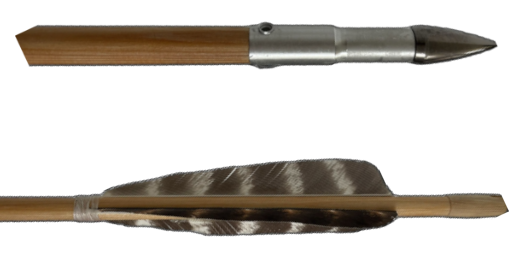
Materials
- Shafting: Weight Matched Port Orford Cedar Wood
- Nock: Glue-On Hardwood
- Fletching: Wild Turkey Feathers
- Adhesive: BT&C Hide Glue
- Finish: Tung Oil
- Point Adapters: Aluminum Slip-Over Screw Point Adapters
- Arrow Heads: Woodsman ELITE Series Stainless Steel 3-Blade Screw-In Broadheads, Easton Match Grade Screw-In Field Points (both same grain)
- Tools: Tru-Center V2 Taper Tool, Fletching Template, Fletching Jig
Shafts
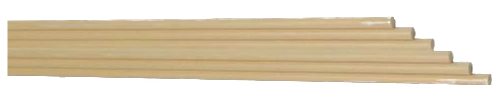
The basic of vibration is important to understand when building an arrow because it affects the arrow's flight and accuracy. When an arrow is released from a bow, it bends and vibrates, a phenomenon sometimes referred to as the Archer's Paradox. If an arrow vibrates inappropriately, it may not flex correctly around the bow and could be deflected by the bow or string, leading to reduced accuracy.
Vibration of an object refers to the periodic oscillatory motion of a mechanical system around its equilibrium position. Studying vibration involves analyzing the forces that cause these back-and-forth motions and their effects on the system.
The vibration of an arrow shaft is influenced by several factors. The spine of the arrow, which refers to its stiffness, plays a crucial role. Dynamic spine is the spine behavior of the complete arrow when shot from a bow and under motion. Dynamic spine is largely determined by the static spine, head weight, and shaft length.
- Static spine is the stiffness of the center portion of the shaft under static conditions. In the arrow industry, the standard for determing static spine is applying an 880-gram (1.94 lb) weight to the center of an arrow shaft supported at both ends 28-inches apart, and measuring the amount of deflection (or bend) in the shaft. Static spine is influenced by factors such as material and geometry (e.g., wall thickness). For example, carbon arrows are stiffer and lighter than aluminum arrows, while wood arrows are lighter and less stiff than aluminum. This will influence the arrow's vibration and flight characteristics.
- The vibration also depends on the arrow's overall weight and the mass distribution. For example, a heavier point will make the arrow bend more, while a lighter point will make the arrow stiffer.
- Length and the mass distribution. For example, a heavier point will make the arrow bend more, while a lighter point will make the arrow stiffer.
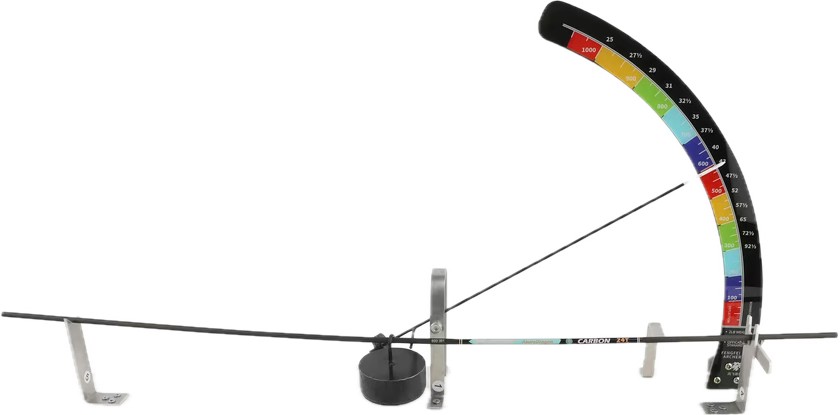
Source: chnarchery.com
Furthermore, the release technique of the archer can also impact the initial vibration of the arrow as it leaves the bow. The way the string is deflected from the fingers as the arrow is released can cause the arrow to bend in a specific way.
Of note, the pressure of the bow riser/arrow rest influences the initial direction of arrow oscillation (flexing). Therefore, the arrow will always begin oscillating in the same direction. If an appropriate frequency of oscillation is achieved, the arrow will completely clear the bow and the arrow trajectory will be more predicatable as it will not strike the bow.
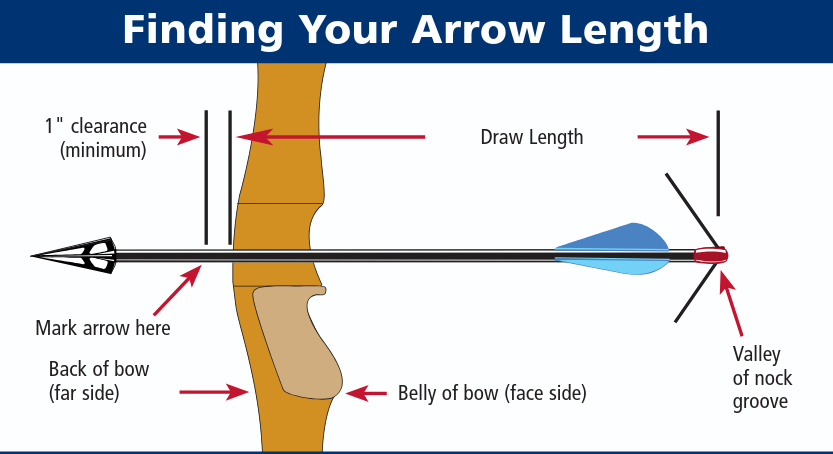
STEP 1: Find your arrow length and draw length.Draw back an extra-long arrow to full draw and have someone mark the arrow right in front of the handle. Measure the arrow from the mark to the deepest part of the nock groove to find your draw length. Add 1 or 2 inches to this measurement so your broadhead will not bump the bow shelf. This will be your arrow length.
STEP 2: Determine your actual peak bow weight.Measure this at your draw length using a scale. Even if you draw at your bow's rated draw, typically 28 inches, the industry standard allows a bow manufacturer to be ±2 pounds from rated bow weight. That is why direct measurement is best.
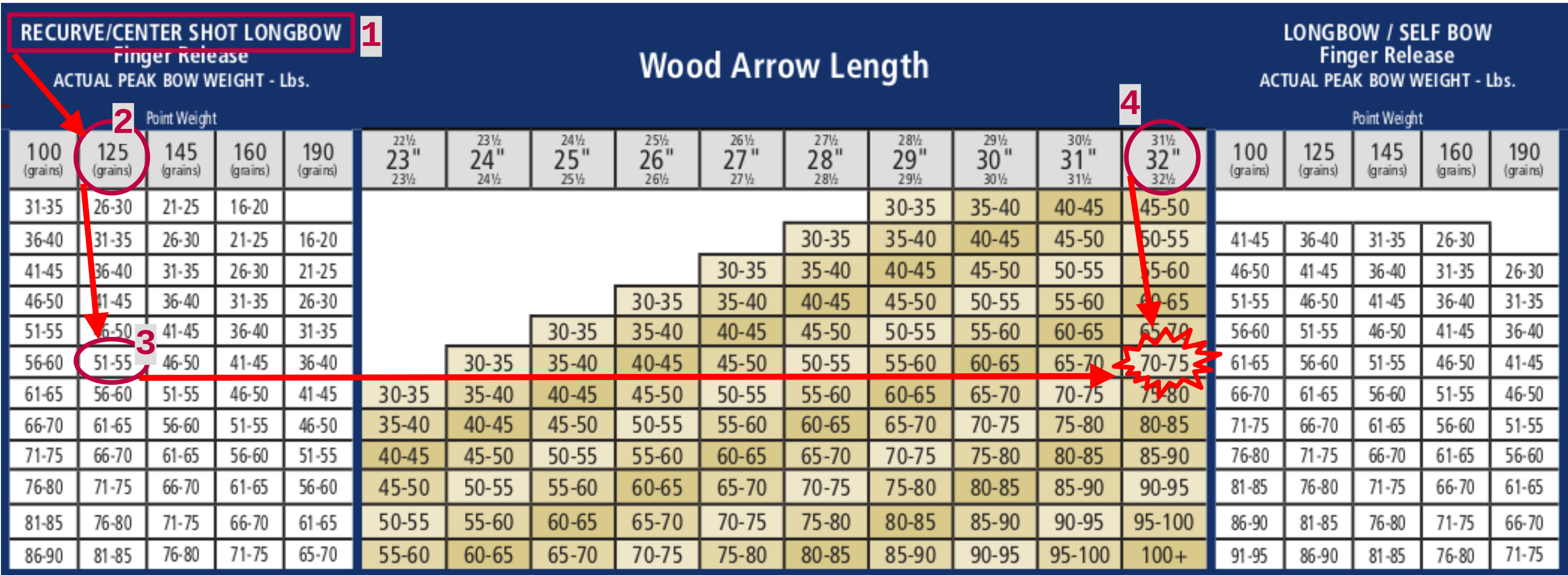
STEP 3: Reference an arrow selection chart.Once you have your arrow length and actual peak bow weight, determine your point weight. The most common point weight is 125 grains. With this information, you can reference the arrow selection chart of an arrow manufacturer or vendor, which will be specific to the arrow shafts of interest. This is how you determine your necessary spine. An example from 3Rivers Archery is depicted here.
A finish can be used to add protection and water-resistance to an arrow shaft, paricularly when wooden. Tung oil is such a finish that is non-toxic when dry, biodegradable, and enhances the natural beauty of the wood grain. It is ideal for sealing bare and unfinished wood, helping to prevent it from marking and staining with use.
Fletching
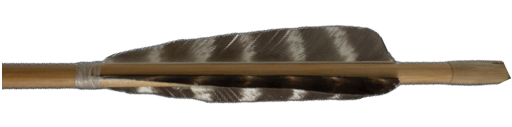
Arrow fletchings help stabilize arrows during flight, improving accuracy. Typically, an arrow has three fletchings, with one being a different color, known as the "cock" or "index" fletch, and the others referred to as "hen" fletchings.
Fletchings are generally made of either feathers or plastic vanes. Feathers are traditionally used; they are lighter and offer better speed. Plastic vanes, or vanes, are more durable, making them popular among bowhunters and compound shooters.
To make feather fletchings, use feathers from the same wing of a bird to ensure consistency in curvature and shape. Turkey feathers are commonly used. You can use primary or secondary turkey feathers, provided they are large enough. You may choose to use a template when cutting them to shape.
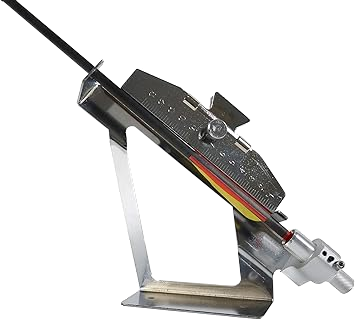
Choose a fletching configuration. It can be straight, offset, or helical.
- Straight fletching provides no spin for added stabilization; it is best suited for short-range shooting.
- Offset fletching offers a balance of simplicity and improved accuracy.
- Helical fletching provides greater stability and accuracy, especially over longer distances and in variable outdoor conditions; however, it can slightly reduce arrow speed due to increased drag and requires a specialized jig for installation.
To attach the feathers to the shaft, you will need an adhesive. You will also likely want to use a fletching jig of some kind to space the feathers. For a natural and fully biodegradable adhesive, consider hide glue. Continuing the theme of sustainability, reinforcement can be achieved by wrapping the forward end of the attached feathers with a material such as sinew. An alternative idea is to use silk dental floss covered in hide glue.
Nocks
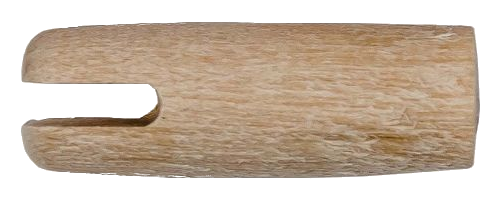
In the case of wood arrows, nocks can be carved directly into the tail. Alternatively, glue on nocks can be used. The most common options are plastic, however they can also be found in wood. The example depicted above can be glued onto a tappered end. In general, nocks are light enough that they will not significantly change the oscillation frequency of the arrow.
Heads
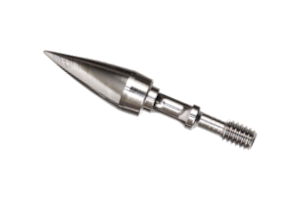
The weight of an arrow head will affect arrow vibration (oscillation) frequency, as discussed in the shafts section above. As such, the weight of the arrow head (or point) is included in shaft selection charts.
Imagine pushing a one pound weight accross a table top using a wood arrow shaft. The arrow will bend in the process. Now, imagine pushing a five pound weight accross the table top with the same arrow shaft. It will bend more in the process. This is similar to how arrow point weight effects arrow oscillation.
Common practice is to use field points for target shooting and broadheads, or other hunting points, for leathal shooting. For any given arrow design, maintain consistent point weights. For example, if the arrow is designed for 125 grain weight points, both the field points and hunting points used should be this weight.